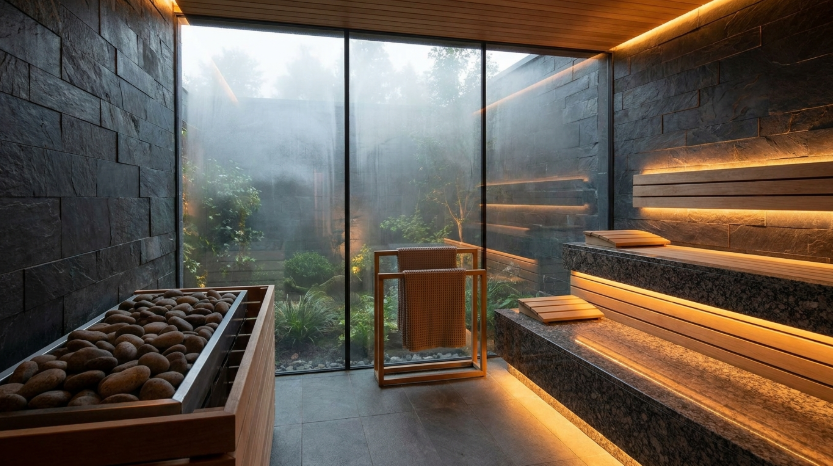
Electric heaters are simpler to install, more predictable to run, and dominate the luxury sauna market because they need no fuel storage or chimney; wood-fired heaters cost less to fuel in areas with cheap firewood and offer a ritual many enthusiasts consider part of the authentic experience. Electric requires a dedicated 240-volt circuit; wood-fired requires a code-compliant chimney and, in many areas, a permit. The right choice depends on local codes, how much hands-on ritual someone wants, and where the unit will actually sit.
What Is the Real Difference in Heat Quality Between the Two?
Both heater types warm stones that release steam (löyly) when water is poured over them, and both produce the same dry-heat range of roughly 150 to 190 degrees Fahrenheit in a properly sized cabin. The physiological experience of the heat itself is nearly identical between a well-run electric heater and a well-run wood stove. What differs is the process: a wood fire builds heat more gradually and adds a light smoky character to the air, while an electric heater reaches temperature on a predictable schedule with a thermostat controlling the cycle automatically.
Is Wood-Fired Actually Allowed Where Most Luxury Cabins Are Installed?
This is the question that eliminates wood-fired heat for a large share of buyers before cost or ritual even enters the conversation. Many suburban and urban jurisdictions restrict or require special permitting for wood-burning appliances, sometimes tied to air quality rules rather than fire code specifically, and rural properties tend to have far more flexibility here. Anyone seriously considering a wood-fired luxury sauna should check local fire code and any air quality ordinances before ordering, since a stove that cannot legally be installed is a very expensive mistake to discover after delivery.
What Does Each Option Cost to Install?
Electric installation cost centers on the dedicated 240-volt circuit, typically $800 to $2,000 depending on the distance from the electrical panel and whether a new subpanel is needed, plus the heater itself, commonly $700 to $2,500 for a residential-grade unit in the luxury tier. Wood-fired installation centers on the stove and its chimney system, and a code-compliant chimney with proper clearances to combustible materials often costs as much as or more than the stove itself, commonly pushing total wood-fired installation into a similar or higher range than electric once the flue work is complete.
Which Costs Less to Run Session After Session?
In areas with access to inexpensive or self-sourced firewood, a wood-fired heater can cost less per session in raw fuel terms than the electricity an equivalent electric heater draws. That advantage narrows or disappears in areas where firewood has to be purchased at retail prices, and it does not account for the time spent splitting, stacking, and hauling wood, or the ash cleanup after each session, none of which an electric heater requires. Electric heaters also let a session start with the flip of a switch or an app-connected timer on higher-end models, which is a real convenience factor for anyone using the sauna on a tight weekday schedule.
What Ongoing Maintenance Does Each Type Need?
An electric heater needs occasional descaling around the stone tray in hard-water areas and periodic inspection of the heating elements, but otherwise runs with minimal upkeep for years. A wood-fired stove needs annual chimney inspection and cleaning to prevent creosote buildup, a known fire hazard in any wood-burning flue, along with regular ash removal and a reliable, dry fuel supply kept on hand through the season. Buyers who want the lowest-maintenance path generally land on electric; buyers who enjoy the hands-on process, and who have a legal and practical setup for it, often find the extra maintenance part of the appeal rather than a downside.
Does the Heat Source Change What the Interior Wood Should Be?
Not directly, but it does change a few practical details. A wood-fired stove sits closer to open flame and hot metal than an electric unit, so the clearances between the stove and any wood surface, including cedar or heat-treated hemlock paneling, are typically larger and specified precisely by the stove manufacturer for fire safety. Electric heaters run hotter at the element itself but are enclosed in a guard designed to keep combustible material at a safe distance within a smaller footprint, which is part of why electric units fit more easily into a compact luxury cabin without eating into usable floor space.
Can the Two Heat Sources Be Combined in One Build?
Some luxury builders offer a wood-fired unit as a secondary or seasonal option alongside a primary electric heater, particularly on larger properties where both an outbuilding sauna and a more accessible backyard cabin are part of the same project. This is less common than choosing one path for a single cabin, since running both a dedicated 240-volt circuit and a code-compliant chimney into the same structure adds meaningful cost, but it is worth asking about for anyone who genuinely cannot decide between the two and has the budget and space to support both, since a builder familiar with dual installations can usually plan the wiring and venting together rather than treating them as two separate projects.
Which One Should a Luxury Buyer Actually Choose?
For a majority of suburban and urban buyers, electric is the practical answer once local codes are factored in, and the technology has advanced enough that a quality electric heater delivers an excellent, authentic-feeling session. For rural buyers with legal clearance, access to firewood, and an appetite for the ritual of tending a fire, wood-fired remains a genuine and often preferred option. Reviewing current heater options and pricing at https://sweatdecks.com before deciding is a reasonable way to compare specific electric models against a target budget once the wood-fired question has been settled by local code.
Frequently Asked Questions
Is a wood-fired heater more authentic than electric for a luxury sauna? Many enthusiasts see it that way because of the ritual and scent, but the physical heat experience is comparable between a well-run heater of either type.
Can a wood-fired heater be used in a suburban backyard? It depends on local fire and air quality codes, which restrict or require permits for wood-burning appliances in many suburban and urban areas.
Which is more expensive to run, electric or wood? Wood fuel can be cheaper per session where firewood is inexpensive, but electric is more predictable with no fuel storage or ash cleanup.
Does a wood-fired sauna heater need a chimney? Yes, a code-compliant chimney or flue is required to vent combustion byproducts, adding cost and an annual inspection requirement.
References
- Clinical Effects of Regular Dry Sauna Bathing: A Systematic Review, Evidence-Based Complementary and Alternative Medicine, 2018
- Effects of heat and cold on health, with special reference to Finnish sauna bathing, American Journal of Physiology, 2018
- Cardiovascular and Other Health Benefits of Sauna Bathing: A Review of the Evidence, Mayo Clinic Proceedings, 2018
- NFPA fire and chimney safety standards
By Simone Ackley